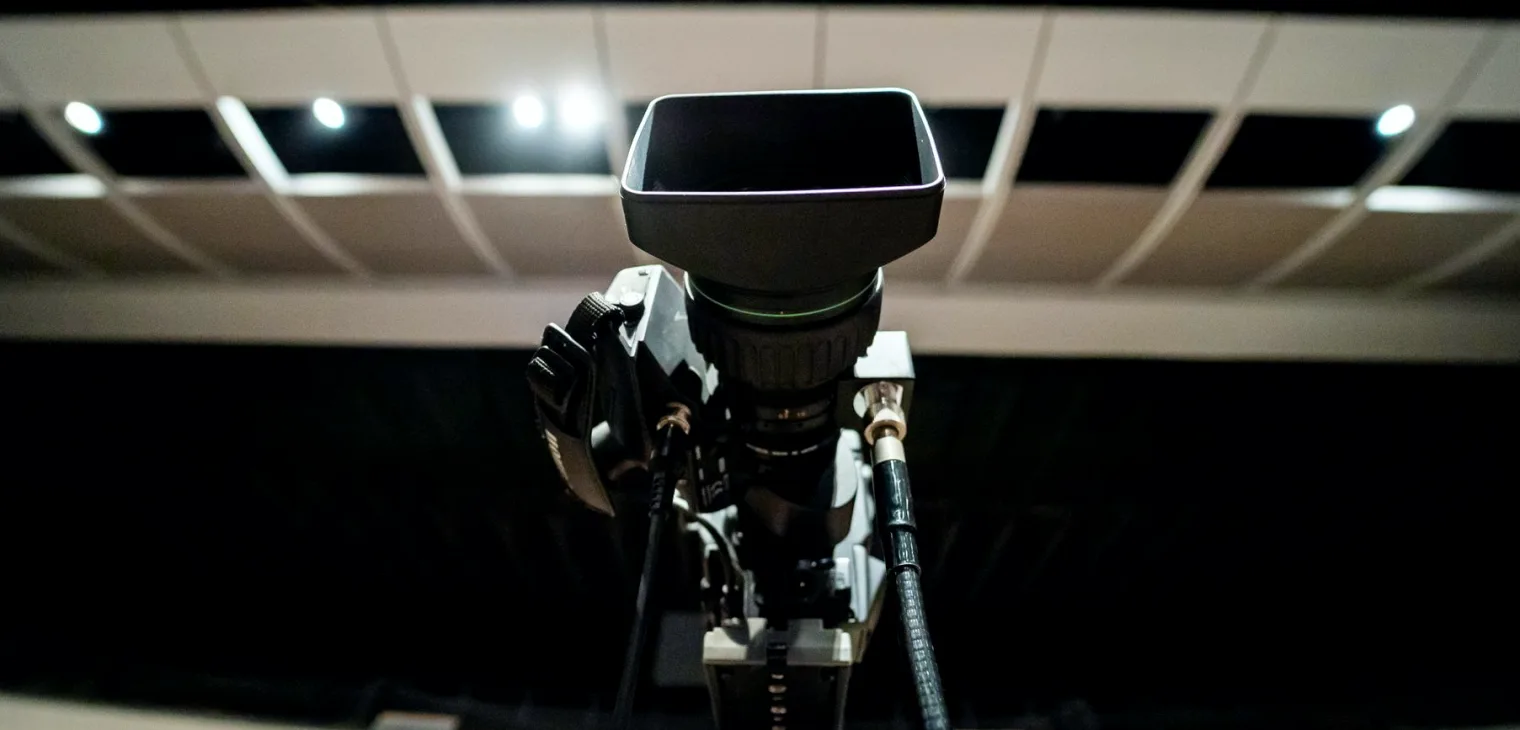
A Crew Handbook Written Around One Late-Night Studio Changeover
How a small regional studio team went from scattered notes to one set of checklists their crew actually used, told through the changeover guide we wrote with Marcus.
The problem Marcus brought us
Marcus runs the technical side of a small studio that turns around two programmes a week with a crew of six, two of whom freelance. When he first contacted us, his difficulty was not a lack of skill. It was that the way the studio actually worked lived in four people's heads, a folder of half-finished notes and a whiteboard that got wiped every Friday.
The trigger was a late-night changeover between a talk format and a short drama insert. A freelancer who had never worked in the building patched the talkback to the wrong group, and nobody noticed until the first rehearsal take. Nothing was lost except an hour and some goodwill, but Marcus saw how thin the safety net was.
He asked for something modest: a handbook the crew would genuinely open, not a binder that sat on a shelf. That request shaped everything we did afterwards, and it is why I wanted to tell this story as part of our technical writing work.
Watching before writing anything
I joined Marcus for two production days before a word of the guide was drafted. Tom, our technical writer, came along as well. My own interest was audio routing and sync, so I paid attention to how talkback, programme sound and the lip-sync check were handled during the changeover.
What we saw was ordinary and useful. People skipped steps they knew by heart and rushed the ones they distrusted. The order of tasks differed depending on who was on shift, and two crew members used different names for the same patch bay.
That last point mattered most. A guide that introduces a third name for the same thing makes confusion worse. So before drafting, we made a short list of the terms the crew already used, agreed one for each item with Marcus, and wrote the guide in those words from the first page.
- Two production days observed before any drafting
- One agreed name for every patch point and signal path
- Skipped steps noted as candidates for the checklist
Shaping the handbook around the real changeover
We built the handbook around the sequence the crew actually followed during the changeover, rather than around the equipment list. Each task sits where it happens in time, so someone mid-shift is never hunting through chapters for the next step.
Tom wrote the checklists as short imperative lines, one action each, with a clear point where a second person confirms. For audio I supplied the details: which sources go to which group, how to confirm talkback reaches the floor, and the quick lip-sync check against a clapper before rehearsal begins.
We kept explanation out of the checklist itself and put it in a short note beneath each one, for the person who wants to know why a step exists. A freelancer in a hurry reads the lines. A new regular reads the notes. Marcus liked that both groups were served without two separate documents.
- Checklist lines kept to one action each
- A named second-person confirmation at critical points
- Short reasoning notes beneath each checklist
What we left out on purpose
Marcus's first draft wish list included a section on every piece of kit in the building. We talked him out of it. Manufacturer manuals already exist, and repeating them would bury the studio's own decisions under material nobody needed to rewrite.
Instead the guide records only what is particular to his studio: the signal routes, the order of power-up, the settings the crew agreed on, and the small habits that prevent known mistakes. Anything the equipment maker already explains well is referred to by the name of the device and nothing more.
This kept the finished handbook short enough to print on a handful of sheets per programme format. It also kept it honest. A page that cannot be kept current will eventually mislead someone, so we only wrote pages Marcus's team could realistically maintain themselves once we had gone.
Trying it on a real shift
Before calling it finished, we asked Marcus to run the next changeover using only the printed sheets, with Tom and me standing back. The freelancer on that shift had not seen the studio's old notes at all, which made her the ideal tester.
She stopped twice. Once, a checklist line assumed a fader label that had been renamed; once, a confirmation step sat in the wrong place and felt awkward. Both were small, and both would have remained invisible had we only reviewed the text at a desk.
We corrected the two lines that evening and reprinted. The changeover that followed ran without the usual calls across the floor, and the talkback went to the right group the first time. Marcus did not describe it as dramatic, only as quieter, which is the result a changeover should have.
Keeping the handbook alive afterwards
A handbook starts ageing the day it is delivered, so we agreed a simple habit with Marcus. When a step is changed on the floor, the person who changed it marks the sheet in pen, and once a month someone transfers those marks into the master file.
We also left him the editable files in plain formats, not a locked layout, so that nobody needs special software to correct a line. Tom wrote a one-page note on how the document is organised, so a future crew member can add a new format without breaking the structure.
Over these autumn weeks Marcus has told us the crew now point freelancers to the sheets before the first day instead of briefing them from memory. That is the quiet outcome we aim for in this kind of work: knowledge that no longer depends on who happens to be in the room.
Marcus's studio did not need a grand manual. It needed the way it already worked written down in the crew's own words, tested on a real shift and simple enough to keep current. That is the heart of our technical writing: watch first, name things once, keep only what is particular to the studio, and leave the team able to maintain it without us.